Pages

Showing posts with label 2012 reads. Show all posts

Thursday, February 07, 2013

Best I Read: 2012

Somehow I managed to not write about any of the books that blew me away this year. I would suggest that you get your hands on a copy of each one.

Dora: A Headcase by Lidia Yuknavitch
"Only one thing to do. I puke."

Most people who know me know that my least favorite genre is coming-of-age. I was a teenager once--first times don't fascinate me. Stories about troubled girls are usually so hackneyed and embarrassing that no feeling but disgust rises to the top. So this book by Lidia Yuknavitch seems like the worst thing: a modern retelling of a Freud case study, told in first-person by a teenaged girl named Ida.

The reason that Dora works so well, or at all, is Yuknavitch's excellent grasp of voice.  Ida's voice, reclaimed from the big cigar himself, is reimagined as a present-day patios of swears, nicknames and certain hallways of pop culture. It took me a few chapters to trust Yuknavitch and let myself be transported back to a time when anything was possible and nothing seemed worth doing, but the clarity with which she shows Ida's conflict brought me around. There is a respect for the potential power, positive and negative, of teen energy that I rarely see, and the deep knowledge that what looks like rebellion can sometimes simply be self-saving.
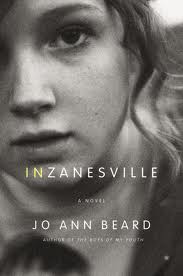
In Zanesville by Jo Ann Beard
A story about the friendship of girls that not only didn't make me want to hurl, but was wise and sweet in a way that surprised me and filled me with, what was it? Joy.

The book opens with the crisis moment in what must be the must under-compensated babysitting job ever. The first paragraph sets the tone well: "We can't believe that the house is on fire. It's so embarrassing first of all, and so dangerous second of all. Also, we're supposed to be in charge here, so there's a sense of somebody not doing their job."

The glorious descriptions of the ordinary desires (like Nehru shirts and tweed culottes on layaway, a feeling of belonging, kittens) and annoyances (like disappointing drunk dads, teenage sisters and slippery babysitting charges) of the main character enhance the simple story in a very satisfying way. Plus, it was sneaky, funny and sweet.


Silver Sparrow by Tayari Jones
Once a week or so I hit the kitchen at my office job, get some tea and look at the castoff books on the counter. Usually populated by ghostwritten memoirs and diet books, this pile has yielded a few great finds. The best? This book.

Normally I wouldn't pick up a book with a comfy blue cover and an anonymous lady in an ugly dress but the name tickled my memory. Back at my desk I googled Jones and a review on HTML Giant by Roxane Gay came up: "This is another one of those books I want to just drive down the street throwing at people because it feels so necessary." When the mighty Roxane Gay wants to fling something at you, you cup your hands, ready to catch it.

Silver Sparrow is about two girls, fathered by the same man, one secret, one "legitimate." I am not telling you anything you won't find out right away. The first line of this book is "My father, James Witherspoon, is a bigamist." Despite the fact that the secret that is central to the story being open to the reader from the get go, there was something brisk and thrilling about the plotting that made me fly through it. The story is told through the voices of each sister, and through them, and tales within tales, Jones makes achingly sharp observations about family, the legacy of sexual violence, sacrifice, anger and power. I also like the details of 80's Atlanta that come through in the girls' assessments of one another.

Zazen by Vanessa Veselka
When I think of this book my chest tightens and I remind myself to just breathe, just breathe and be glad that writers like Vanessa Veselka are getting published in my lifetime. It is that good.


Zazen is a punch-in-the-chest kind of book about radical politics, failure, mental illness and, eventually, hope. It conjures up visions of a near future with images from the present, recognizable to anyone who, let's say, ever lived in a communal house or when vegan or demonstrated outside a business, full of righteous anger. Or maybe just lived in a place like Portland or San Francisco after the shine of "alternative living" wore off. This book is for all the fallen true believers out there who still hold a tiny sliver of hope in their hearts, a sliver that never gets to glint in the light and causes more aching than they'd like to admit.

One of the more surprising things about the book was Veselka's use of the sibling relationship to fully develop the main character, Delia, and subtly provide back story without straining the first-person framework. Delia's feelings about her brother and sister are complex and true, and given weight that I rarely see and greatly appreciated.

Fantastic Women: 18 Tales of the Surreal and the Sublime from Tin House edited by Rob Spillman
I picked up this collection on an evening that I promised myself that I would not buy a book. That night, however, I really needed to be transported to another world, any other world. This book, a staff pick at The Spiral Bookcase, is filled with some of the best writers working today, including: Lydia Millet, Kelly Link, Lucy Corin and Samantha Hunt.

Relationships rub the wrong way, Drive-Through-House cookie recipes are tested, skin is shed and children feared in these stories. My favorites get at the strong crypto-currents of emotion behind everyday things like family, work and love. "Drive-Through House" by Julia Slavin is the first that comes to mind. A take on familial obligation, the story captures the dust and exhaust flavor of a dying roadside attraction and the cramped sadness of being afraid to leave a house that has no door.  "Snow White, Rose Red" by Lydia Millet, which I read first last year in Kate Berheimer's collection My Mother She Killed Me, My Father He Ate Me, is a juicy story told from the point of view of a "disappeared" man, a sort of house-breaking hobo, with a slightly sinister unreliability: "I met the girls and instantly liked the girls, Of course I liked the girls." "Americca" by Aimee Bender asks if memories are gifts and answers that growing up is a kind of loss no matter what.

The superb choice of stories in this collection inspired me to purchase two other Tin House collections and seek out the novels they've published. That says it all, I presume?

Thursday, January 10, 2013

Regional Relationships 3: Yock Yok by Feresteh Toosi & Neil Brideau


After too many days, I hit up my PO Box and found this package from Regional Relationships, a Chicago-based outfit that investigates the idea of "regional."

This third installment of the series is by artist Feresteh Toosi and cartoonist Neil Brideau. It includes a comic, dishtowel and audio interview on CD.

The project explores Yock, a noodle dish that goes by many names, including "old sober."  The comic takes the reader through the many legends about the tomatoey noodles through interviews, tall tales and even some true crime. The last line in the comic is "It's old food, and broke people eat it! Go eat some!" But there is no recipe. It is cute, thanks to Brideau's art style, but slight, and left me wanting more.

The dish towel was my favorite element. With its combination of utility and fantastic elements— it places the geographical area where yok exists in a mythical context—makes it an interesting and enduring item that will remind you of what you learned every time you use it. I especially like Brideau's sea monsters.
The presentation of the CD led me to I expect much more from the interview than a less-than-five-minute chat with a friend of the artists who makes a vegan yock and appears in the last two panels of the comic. It feels tacked on to the project and actually takes something away from the exploration.


I am not sure how this project fits in to the rest of the project but I'd like to find out. Subscriptions are pricey, but there is a budget option for $30/year.

Tuesday, January 08, 2013

Baby Geisha by Trinie Dalton

What better surprise from a trip to L.A. could there be than a Trinie Dalton reading at Family Bookstore. I already talked about that here, back when it actually happened. I recommended this book to Prickly Pete by saying that they were perfect stories for his trip to the city: short, full of vice and sweetness. Since he hasn't didn't return it until now, I'd like to believe that the rec went right.

Dalton's work crackles with desert heat with bursts of wildflower color. It is utterly surprising without cheating her characters of depth or realness. She captures what is sneaky and interesting about Southern California: bad-drug haze, almost petulant natural beauty, burnout wisdom and the fringes of society and sanity.  

"'Is that a mushroom cult?' people whispered as I fluffed up kale bundles." (Escape Mushroom Style)

Journeys and their place in personal reinvention, or perhaps, redemption, are a running theme in the collection. Whether it is to a sloth sanctuary in Costa Rica, hot for a Pulitzer (Pura Vida) or a three-dollar-a-night campsite in the Ozarks (Wet Look),these characters are trying to run towards their better selves and mostly failing.

Baby Geisha is about half stories and half monologue—The Sad Drag Monologues to be exact. I preferred the stories, especially The Perverted Hobo, Wet Look and Jackpot (II), because they are denser and more of a much-need, imagery-laden, punch to the brain, but enjoyed the rhythm of the monologues. From Small Time Spender, in reference to free enlightenment in the age of "austerity":

"The all-loving, all-embracing wise universe: the Jewel Tree Meditation is free... Enlightenment awaits us, in the form of Stevie Wonder. He's living with his hot wife in Detroit. Time to write a fan letter."

Boom Boom Boom. Loved it.

Tuesday, January 01, 2013

2012 reads

Fantastic Women: 18 Tales of the Surreal and the Sublime from Tin House edited by Rob Spillman

Blood Child and other stories by Octavia E. Butler

Nurse Nurse by Katie Skelly

The Opposite House by Helen Oyeyemi

Mr. Fox by Helen Oyeyemi

Forecast by Shya Scanlon

Significant Objects edited by Joshua Glenn & Rob Walker

Red as Blood, or Tales from the Sisters Grimmer by Tanith Lee

Seven Gothic Tales by Isak Dinesen

Anna & Eva by Jennifer Daydreamer

Oliver by Jennifer Daydreamer

The Icarus Girl by Helen Oyeyemi

Someplace to be Flying by Charles de Lint

Chester 5000 by Jess Fink

Radio Iris by Anne-Marie Kinney

Torch by Cheryl Strayed

Firebirds Rising edited by Sharyn November

The Night Circus by Erin Morgenstern

Better With You Here by Gwendolyn Zepeda

How to Get Into the Twin Palms by Karolina Waclawiak

Dora: A Headcase by Lidia Yuknavitch

Three Messages and A Warning: Contemporary Mexican Short Stories of the Fantastic edited by Eduardo Jiménez Mayo and Chris N. Brown

There Once Lived a Woman Who Tried to Kill Her Neighbor's Baby by Ludmilla Petrushevskaya

Only Skin by Sean Ford

kus 11: Artventurous

My Mother She Killed Me, My Father He Ate Me, edited by Kate Bernheimer

In Zanesville by Jo Ann Beard

Girl, Reading by Katie Ward

kus 10: Sea Stories

Are You My Mother by Alison Bechdel

Kiss & Tell by MariNaomi

Silver Sparrow by Tayari Jones

Deathless by Cathrynne M. Valente

The Ask by Sam Lipsyte

The Accidental by Ali Smith

Baby Geisha by Trinie Dalton

kus 9

Embassytown by China Mieville

Tell It Slant by Beth Follett

Kraken by China Mieville

Wit's End by Karen Joy Fowler

Zazen by Vanessa Veselka

To Each His Own by Leonardo Sciascia

Wednesday, December 26, 2012

31 DRAWINGS THAT HAVE SOMETHING TO DO WITH BEING IN LOVE AND NOT BEING IN LOVE by Eleanor Davis

It is no secret that I love Eleanor Davis. When I discovered that she'd be making a mini of her pieces for the most recent Giant Robot Post-It show I felt the gimme-gimmes overtake me.

I rarely allow myself to submit to such clammy passions, but it seemed a win-win situation. Sure the black of the stapled spine is already creasing away and there are a few unexpected blank pages, but considering that a pencil drawing of baby by Davis was included--like a best and most unexpected autograph--this $5 treat is all-ok with me.

Davis' usual botanical flourishes are a lush and almost furtive presence in these small, black and white drawings. It is almost as if the branches, leaves, flowers and berries want to distract the viewer from the things that the human figures are doing to one another, or sometimes the things that they refuse to do.
 

Some drawings are subtly heartbreaking >>>
Some are so sweet that you let out a breathe that you didn't know that you were holding in >>>
One of the things that draws me again and again to Davis' work is the way pain and hope are entwined in even her simplest images. You can feel the struggle to find answers to why we should persist. She often focuses on sex, love and the body and, unsurprisingly, all of those themes are present in 31 DRAWINGS THAT HAVE SOMETHING TO DO WITH BEING IN LOVE AND NOT BEING IN LOVE. Sometimes, especially in her sketchbook work, anger or disgust with, well, human beings, comes through first, but instead of feeling like a reminder of horrors, there is an interrogation of relationships that challenges and inspires me.

Tuesday, November 20, 2012

The Icarus Girl by Helen Oyeyemi

I had an imaginary friend. Her name was Cousin Jane and she lived in the sewer. I could call her on the fire hydrant that was the same color as her hair. I don't know where she came from or when she left, but I know that I never saw her--I simply knew what she looked like. She was my cousin, you know?

The Icarus Girl is about an unpopular, sickly, and somewhat sad girl named Jessamy, or "Jess," who lives in London with her Anglo dad and Nigerian mom. The book plays with permutations of cleaving and doubling: Jess's "mixed" parentage and the division of her life between sickness and health are two of the more subtle examples of that. The more central doubling occurs when Jess and family go to Nigeria for a month. Jess feels better with all the aunties and cousins, but still on the outside. When she goes exploring the family compound she catches a message just for her: "Then her eye caught on something and she backed, all thoughts of staircases and balconies and upstairs rooms completely forgotten.

On the surface of the tabletop, someone had disturbed the dust. Scrawled in the centre in lopsided lettering were the words HEllO JEssY"

This is Jess's first introduction to a mysterious, mischievous girl that she nicknames Tilly or TillyTilly. But what exactly is TillyTilly? And what does she want with Jess? I loved how Oyeyemi shows the danger inherent in Tilly's seduction by letting the reader see the manipulation that Jess, as an 8 year-old, can't. When Tilly shows up on Jess's London doorstep things get really good.

Sure, this book is a first novel, and that shows occasionally, but The Icarus Girl is scary, very scary. It's a horror book dressed up like a literary novel about the trials of youth and the dangers of loneliness. I stayed up all night reading it, by coincidence in my childhood bedroom, and deep in the dark, I got the for-real shivers. Cousin Jane stopped calling long before my teens but just for a moment I experienced the feeling of the fire hydrant suddenly sounding into the night.

Thursday, October 25, 2012

Chester 5000 XYV by Jess Fink

Ah, comics erotica, when you're good, you're good, when you're bad, that's normal.  The story of a woman and her sex robot, Chester 5000 XYV is somewhere in between. A mostly silent, Victoriana-themed, hardcore is promising of course, and the fact that there is a sweetness and fun about the whole book is even better. But the thing about about art meant to jingle jangle your downstairs is that it kind of matters what you are into and I am into story and this is where the book forgets foreplay.

The book opens with heterosexual newlyweds going at it. They seem to be having a good time when the man looks disturbed and runs from the room. The next panel is the wife looking sad and the husband thinking hard. The next page is devoted to his construction of the titular robot, before he hands his wife the key and runs off. The rest of the story shows the evolving relationship between wife and robot, husband and jealousy and a determined brunette and all three of them, but, storytelling-wise, that first page haunts the rest of the book.

Husband flees wife
I can't figure out why the husband flees the bedroom and decides to replace himself with a robot, which makes his eventual jealousy less interesting, and his love for his wife less believable. The book copy has an answer, but I don't read book copy and didn't even look at it until writing this review. It says that he is too busy thinking of inventions to fuck, but it doesn't ring true, partially because of the time he is shown jackin' to their shenanigans and partially because he creates a robot that can love her. The brunette's lack of distinguishability (besides hair) from the wife also bugged. If her body looked different from the wife's it would have helped give her more of a character, especially with much of the action in this book happening during, well, action. The usual cartoony mangling of anatomical detail (missing buttholes, weird proportions, etc.) crops up here and there which is distracting but not terrible. Fink's style, though not my preferred vision of erotic cartoons, made details of robots, ladies and annoying dudes getting off pretty fun, even if the final product was a tad too superficial to earn a spot in the try harder library.

Friday, September 28, 2012

trip book style

I took a most relaxing vacation. I missed SPX and the Brooklyn Book Fest and Theo Ellsworth and everything, but I promise that I did my part in between redwoods, oaks, MUNI, METRO and fish watching and fish breakfasts.

blurry enough?
Since we stayed in Silverlake for two nights, I had to check out Secret Headquarters. I barely made it ot of there with adding tens of pounds to my already book-laden luggage. Because I cannot drive I must walk and this sends me to Fairfax when I am in L.A. Not only does the lovely and talented Chez Mo live very near, but the Farmer's Market, Family Bookstore and Cinefamily are all on the row. Nothing grabbed me at FB, but I paced and dug until I pulled up HAV by Jan Morris. The intro by scifi legend Ursula K. LeGuin sold it.

When several people tell me that I'll just love something, I start to feel a little uneasy. This usually means that the something is something horrible. I guess I just give off that vibe.  So, when we hopped on the Expo line to Culver City I was a little apprehensive. The Museum of Jurrassic Technology did not disappoint, however.  I picked up No One May Ever Have The Same Knowledge Again: Letters to Mount Wilson Observatory 1915-1935, edited and transcribed by Sarah Simons. This book not only arouses the urge to write letters, but also contains some sweet telegram spam:


Most of the time between LA and SF involved nature and driving and basking. I read my airport-bought The Night Circus by Erin Morgenstern. It was sufficiently distracting, but ultimately bloodless, despite pretending to be a romance. I spent most of my time breaking into a new journal with entries describing warm weather, drawing pictures of my luggage and listing the various plants I saw that day for our leather-clad, cyborg, future kids.

I finished The Night Circus by San Francisco. At Borderlands Books, I traded it in for a bit of credit and picked up the anthology Firebirds Rising edited by Sharyn November and the Tachyon Press chapbook A Flock of Lawn Flamingos by Pat Murphy. Firebirds Rising is YA, an unpleasant surprise that I could have avoided with a closer reading of the cover. The troubled teens helped pass the flight back and included two stories that I really liked by two weirdo masters: "Quill" by Carol Emshwiller and "The Wizards of Perfil" by Kelly Link. A Flock of Lawn Flamingos was a sweet and simple ode to troublemakers. I read it on the way to work my first day back to Midtown, letting the story take me back to California.

Now that I am back, life has taken a sad and shitty turn, so I especially relish the worry-free reading and writing time I had.

Tuesday, September 25, 2012

Torch by Cheryl Strayed

I spent much of Sunday night discussing this book so I won't go on here. Suffice it to say that I liked Torch, but felt that my knowledge of Strayed's biography, learned from her fantastic essays and Dear Sugar column, detracted from the story itself. It was not what I expected; I felt that the book lacked the balance of brutality and compassion that characterizes Strayed's nonfiction work. The addition of sensual details, especially relating to the rural setting, would have added some of that back in.

However I wanted to share this passage from the book about forgiveness:
Years passed. She was thirty, then thirty-five. Slowly, stingily, she forgave them without their knowing about it. She accepted the way things were—the way they were—and found that acceptance was not what she imagined it would be. It wasn't a room that she could lounge in, a field she could run through. It was a small and scroungy, in constant need of repair. It was the exact size of the hole in the solar eclipse paper plate, a pin of light through which the entire sun could radiate, so bright it would blind you if you looked. She looked.
This passage waves to the wrestling Forgiveness Twins, Impossibility and Necessity, while foreshadowing the incomplete forgiveness that hounds the characters after Teresa, the character who's forgiveness of her parents is examined in the above passage, dies unexpectedly.

Monday, September 24, 2012

How to Get Into the Twin Palms by Karolina Waclawiak

I read this like a pelican eats a fish. Why I gulped it down so fast I'm not sure, because How to Get Into the Twin Palms is about a woman changing herself to capture a man and I usually don't care for that story. But, despite the simple plot, there is something very much not straightforward to this story. The book's first line, "It was a strange choice to decide to pass as a Russian," alludes to this and though the following sentences seem to give reasons why the main character, Anka, chooses to do just this and more, they don't provide easy answers.

There are a several things going on in this novel. Despite being framed as a way to "crawl out of [her Polish skin]" and find out, between Russians and Poles, "who was under who," Anka's desire to get into the titular Twin Palms nightclub seems less like a desire to escape a specific ethnic identity and more as a particular way to obliterate self. When it comes down to it, Anka feels like she is nowhere and nothing. The fact that her search seems like a whim, a way to pass her recent unemployment, makes the mercenary quality of her plan--find a Russian man, seduce him, gain access to the inexplicable charms of the club--distressing and, as she begins to succeed, it gets weirder. Anka is unpleasant to spend time with. She is prickly and seems fascinated by a chinzy excuse for paradise; sitting with her as she decides to ruin her life is hard only because you keep wanting something more interesting to be revealed in her desperateness. Anka is the dark side: boring without being sweet, self-destructive without being artful, strange without being intruging.

At its heart, How to Get Into the Twin Palms is the story of a breakdown. It is also a story about being 25 and unmoored, about being an immigrant, about what happens when the money runs out, about being a woman, about sex and relationships. Most potent is how the book examines modern American womanhood. Anka herself is consumed with beauty and courtship rituals so unexamined they read as ridiculous and disgusting, and she herself finds the reality of the body as something to be fought against. The character of Mary, a lusty, oversharing, and unraveling old lady who attends the bingo where Anka is occasionally employed, is a reminder that loneliness and desire aren't assuaged by age. Mary is a specter in Anka's life and Anka begins to hate her for her needs, the same needs that Anka wants to satisfy for herself. The two women's exchanges are some of the most satisfying in the book because of their unexpected weight.

I don't know if it is because I just got back from another quasi-disturbing trip to LA, but the importance of the LA setting crept up on me only after this visit. Anka is always scraping at her skin, dyeing her hair and doing the laundry with stinging stinky chemicals, with dinged faith that change will happen this time."The box said Spicy Ginger... I put on a shower cap and caught myself i the mirror.  I looked ridiculous, but this was it. I knew this was what I finally needed. I would look ravishing fresh and new." Also to this point is the exchange between Anka and a regular-guy-type fireman who is in LA to fight wildfires:
"What's your problem," he asked.
I wasn't sure how to answer.
"I don't know what's yours?" I said.
This place. This place doesn't make sense to me."
"It's alright. Takes some getting used to." I let pool water into my mouth and pushed it out again, for effect. "There are places you should see."
Even after some time, I can't quite pin down my feelings about How to Get Into the Twin Palms. As usual, Two Dollar Radio's production is beautiful. Examining my reactions to Anka and her world gave me a lot to think about and sometimes that is enough.

Waclawiak will be in conversation with Vanessa Veselka(author of my favorite book from last year, Zazen)  and Sarah Mcrary on October 11th @ 7pm @ Melville House.

Wednesday, August 15, 2012

a choir of caresses

My recent reading life takes place mostly on the subway. This week's B/Q train book has been Three Messages and A Warning: Contemporary Mexican Short Stories of the Fantastic edited by Eduardo JimĂ©nez Mayo and Chris N. Brown. 

In "Future Nereid," by Gabriela Damián Miravete, translated by Michael J. Deluca, these two lines lines about reading jumped out at me:
"In your belly something will shrivel at the thought of the unfortunate distance which sometimes separates us from souls attuned to our own."

"You'd like to underline the words in this book as a substitute for a choir of caresses."
And something shriveled in me, and something else bloomed.

///|||\\\

And this is why I give my heart to authors that find the combination of words that describe a part of me, of my life or my thoughts or give me new places to go to. I relentlessly recommend them, I buy their books, I think of them often. Sometimes I write them letters. It is why I keep reading. I keep reading because they love me through the page, a special, wide-spectrum, im/personal love ray.

Who has caressed you?

Wednesday, April 18, 2012

Wit's End by Karen Joy Fowler

Since reading the collection of short stories What I Didn't See, I've been going through Karen Joy Fowler's back catalog and snatching up anything that didn't have Jane Austen in the title. This book sounded great for a fun bit of a mystery reading, hopefully with Fowler's trademark emotional smarts.

And, in some ways, that is exactly what I got. Wit's End includes many of the elements that appear in Fowler's other work, such as an immortality cult with one surviving member whose founder was mysteriously exempt from the group's celibacy vow (the sweet and funny "Always"), mystery writers and their foibles ("Private Grave 9") and the strange ways that people do a number on one another (too many to mention). The plot centers around the mystery surrounding the relationship of godmother, famous mystery writer Addison Early, and her father—how exactly it began and what soured it. There are descriptions of meals that made my mouth water, images of Santa Cruz that jarred my memories of the place and lots of creepy letters. These parts kept me engaged and excited like a good genre book should.

But what I am gracelessly dancing around here?

I'm not spoiling anything by telling you that the main character, Rima, is twenty-nine and an orphan. She is grieving for both her mother and father, as a unit and separately. Their deaths color her life and make her feel set apart from other twentysomethings, apart from everyone. The thing is that not only are her parents dead, but her little brother is dead, too. He died at the same age as my little brother, from essentially the same cause. This worried me for many reasons--was this not going to be the light read I craved and what if the author got it wrong?

Fowler gets it right, that spectrum of feelings and experiences when someone (or everyone) you love dies. She shows how a person can live with those things and not be permanently broken through the voices of both Rima and Addison. The parts about grief sang with truth while being both simple and in service to the story. It felt good to read even as I shook with angry recognition:

"Rima was perpetually offended by the suggestion that luck should be graded on a curve. Of all of the false comforts she'd been recently offered, the most poisonous one was the one that told you to be grateful that you were better off somehow."

"There'd been an undertone in Scorch's* blog, maybe even in a few comments Addison had made had made, or maybe Rima had imagined it. You weren't supposed to love your brother more than anyone else in the world..."

"In telling the story to Rima and Tilda, her point was a different one. Sometimes something happens to you, she said, and there's no way to be the person you were before. You won't ever be that person again; that person's gone. There's a little freedom in every loss, no matter how unwelcome and unhappy that freedom may be."

I was also really into the idea that runs through the book that we make our own families. This was the subtle message that pulsed under all the loss--inspiring without any saccharine promises.

*Oh how I hate this character's name. Every time I would see it on the page I'd scoff a little then dive back in. I get the whole Santa Cruz, self-invented and kinda stupid young person name but it just didn't sit right.