Pages

Showing posts with label scifantastic. Show all posts

Monday, January 18, 2016

2015 finally dies!

Despite this being a horrible life year, it was a very wonderful reading year. Not included in my tally are the many books I started or collections I picked through over 2015, many of which were also good but not for me, not right now.

This has been the first full year I've lived without my father after two years of his frightening and terrible decline. I was deeply involved with my father's end of life and death, the details of which I am still reckoning with and will be for quite some time. Being faced with admin tasks that are not only relentless and boring, but suffused with such powerful hurt has been exhausting and lonely. Luckily for me, cartoonist Roz Chast went through some similar things and decided to write a funny, informative and just SO TRUE book about it called Can't We Talk about Something More Pleasant? This book was loaned to me by a great friend. When I read it I cried, but with relief.
There are books that take you away and books that make you stay and the three novels in The Southern Reach trilogy by Jeff Vandermeer accomplish both. The first, Annihilation, is a missive from an inhospitable land, filled with beautiful natural details and almost unbearably tantalizing mystery. The second, Authority, is about juggling identities and becoming oneself, and while the main character wasn't all that interesting to me there were enough other things going on in the story to carry me though. The final volume, Acceptance, follows a character present in the previous two and brings many of the mysteries of the Southern Reach to a satisfying close, without solving a single thing. Vandermeer created a world with endless frightening possibilities and endless frightening beauty that I still think about; this trilogy is an excellent reminder that life is complex and not simply a trial, no matter how much horror gets served up.
Speaking of horror, I returned to an old favorite this year The Haunting of Hill House, after recommending it to a friend. Turns out that Jackson's sure voice and teasing plotting were exactly what I craved at the moment, and it is always worth taking another look at what the desire for acceptance will do to a person. Plus, Theo, always Theo.

To balance the many terrible surprises of the year, the mail at least was peppered with some lovely ones care of my subscriptions to four comics presses: Ley Lines from Grindstone Comics/Czap Books, Kus, Retrofit/Big Planet and Frontier from Youth In Decline. I wrote about some here on try harder, some I just sucked in. Two stand outs I didn't write about, both from Retrofit/Big Planet were Ikebana by Yumi Sakugawa and Sea Urchin by Laura Knetzger. I loved Sakugawa's quiet story about stopping giving any fucks and creating oneself. Sakugawa's work always speaks to me, but this one came at exactly the right time. I've been following Knetzger for awhile, and just got her all ages tome Bug Boys from Czap Books. Sea Urchin is decidedly adult autobio about depression and what we think about when no one is watching.

I listened to many fewer SFFH podcasts the second half of the year than I usually do, mostly because I fell victim to Fallout 4's immersive charms. However the casts from The District of Wonders, Escape Artists, Clarkesworld, Strange Horizons, Uncanny and Apex, continue to expose me to exciting short story writers and take me places I never could have imagined.

And no 2015 survey would be complete without talking about twitter. Besides the usual dog jokes, book news, essay recommendations and author process notes that twitter always provides, this year the service was one of the only and best ways I could connect with my own grief. That meant posting photos and thoughts, as well as meeting (or further developing relationships) with others that have been through similar stuff or are just empathetic souls. Invaluable stuff.

I know I'll be thinking about the stuff I read in 2015 for many years to come. What about you?

Tuesday, May 26, 2015

weird fucks in Portland

I went to Powell's and, a surprise to no one, the small press section got me.

It started with the irresistible Weird Fucks by Lynne Tillman. A few of the stories in Fast Machine were in the Before You She Was a Pit Bull zine, published by Future Tense Books. I really enjoyed those stories so more stories seemed like a good idea. Toilet Bowl, published by Guillotine Press, couldn't be more in my wheelhouse. I've been wanting to read Chelsea Martin for a long while.

My picks from the other sections of the store: A bad Philadelphian, I've never read any Delany and short stories seemed a good place to start.  And North American Lake Monsters and Super Mutant Magic Academy were simply must-haves.

What are you reading these days?

Wednesday, February 11, 2015

nu vampyres

Like all sane people, I love the idea of beings that subsists on life force, that kiss with a price. It hangs around in the back, all in black, looking for you, just for you. Pretty cool. Yep.

But vampires have become overexposed and boring, stripped of their complexity by trying to perfectly reconcile love and desire with being good, being redeemable, as if that is the main problem with loving the undead.

Here are two short stories that are about vampires, among other things. Both have been swirling around my brain for days.

I Can See Right Through You by Kelly Link on McSweeney's
I am in the midst of Link's new collection, Get in Trouble, now, and this was the first story I read from it. Concerning the movies, young love, obligation and dead nudists, I Can See Right Through You is probably my most recommended story of last year.

Traveling Mercies by Rachael K. Jones, ( I listened to it read by Anaea Lay) on Strange Horizons
This short short story concerns the logistics of being a guest when you never die. I would love to take a peek into the main character's address book.

What are your favorite vampire stories?

Wednesday, January 28, 2015

The podcasted fiction of Clarkesworld's issue 100 is a warm chunk of aural delight for these freezing days. I listened to the three below over the last few weeks and each has stayed with me. All are read by Kate Baker:

"It also ate that one picture of your old girlfriend from, what is it, ten years ago now? The one at the beach where it was pouring rain and she was freezing her ass off but then she got hit by that huge wave and even though she was soaked to the skin she started laughing and couldn’t stop, and that was pretty much the moment you fell in love with her. The begitte was right about that one, too."
The Apartment Dweller’s Bestiary by Kij Johnson 
This collection of flash stories fit seamlessly into my recent ruminations on what makes a home and the things we choose to share our spaces with. Alongside the descriptions of small, fantastical creatures, I was very into the glimpses into so many lives and so many homes.

"Bethany was baffling to me. Baffling. She was still taking cat pictures and I still really liked her cats, but I was beginning to think that nothing I did was going to make a long-term difference. If she would just let me run her life for a week—even for a day—I would get her set up with therapy, I’d use her money to actually pay her bills, I could even help her sort out her closet because given some of the pictures of herself she posted online, she had much better taste in cats than in clothing."
Cat Pictures Please by Naomi Kritzer 
Not generally a fan of AI stories or cats, I greatly enjoyed this humorous story about a self-aware, meddling intelligence that uses personal info to decide what is best for three sad-sack humans.

"Brother, I love him. It’s absolutely not because the world keeps hurting me."
A Universal Elegy by Tang Fei
I loved this epistolary story about identity and love. It relates the pain of trying to be understood and the intoxication of feeling so very subtly and effectively.

Wednesday, January 07, 2015

I made a resolution to read more this year. I want to dive in to your story and not come up for air until the next one is in my hand.

In the meantime, I've been listening to stories. This one, Vacui Magia, by L.S. Johnson, churned around in my guts for longer than I expected. The structure, that of a spell or list of instructions, provides a comforting scaffolding for a very disturbing, but personally familiar, tale. It is about parents, the weight of legacy and the extremes of grief. It is also about witches:

"No one ever thinks it will come to this. Yet you wonder, now, if every witch has a time in her life when she finds herself crawling through damp darkness, clothes dirty and hair tangled, wild with a desperate, fearful hope. You will not read about this in any book. You will never truly know how many have crawled like you, have panted like you, have felt that awful hammering of failure and loss in their heads as you feel it now."

You can listen at the above link or read here.

Friday, August 22, 2014


Long reads for a short trip to the woods, a short trip to the sea.

The Mother Courage press book in the middle is super weird scifi, but not in the way you'd expect. The Gilbert is pleasurable but not as greenly enveloping as I'd hoped for. I always love KJF and I hope this book doesn't tear me apart.

Who are your companions these days?

Sunday, March 23, 2014

airwaves

NYPL, Image ID: 1651592
Over at Star Ship Sofa no. 239, I really liked The Time Travel Club by Charlie Jane Anders (at 21:30 minutes). Anders' stories are always suffused with humor and this one is no exception. Her protagonists are much more like people I know than most other scifantastic authors', with their sobriety probs and tattoos. It never feels forced and that is a writing miracle.

At Lightspeed magazine, listen to How to Get Back to the Forest by Sofia Samatar (click listen). It's about friendship, aging and what one gives up for safety.

I've been looking for some new genre fiction podcasts. I found The Squidpod on a list somewhere and decided to try it out. Many of the stories focus on AIs and the cusp-of-singularity life. Neither of my following recs are in those worlds, but both drew me in:
Zeta by Dave Cochran (click on the MP3 to hear)
Grats by Dave Cochran (click on the MP3 to hear)

 And you?

Monday, February 03, 2014

The Shining Girls by Lauren Beukes

Oh, Penn Station bookstore, why are you so awful? I wandered around looking for something to buy in paperback and not a thing caught my eye until I saw Lauren Beukes' name popping out from the spine of The Shining Girls. I have been meaning to read her for awhile, so I bought it, hoping for a good escape from reality during a recent Philly trip.

I don't read jacket copy, so when I dove into the story about a time-traveling serial killer I was disappointed to find that it wasn't inspired by The Shining.  Where my supposition came from, who knows, but those two books do have one common theme--an evil house.

When I was a child, I loved to turn off the lights, close my myopic eyes and wander the house I grew up in.  I do the same now. Dreams are stuffed with the houses of relatives and childhood friends. I contain many houses and some of them are traps.

Is the house in The Shining Girls a trap for a certain kind of man or did the house itself come from his desires? Well, hm.

Though the pacing is excellent, The Shining Girls doesn't hold together in the end for a few reasons. The book has a Chicago setting, it really could have been set Major Anycity, U.S.A. and the Chicago-y things that do appear just seem like excuses to show the research that went into them appearing in the first place, as do some of the characters. Is it cool that there is a pre-legal abortion provider's POV included? Yes. But since we only get a little time with each of the victims--with the exception of out final girl, Kirby, who survived a childhood attack by Harper, the killer--the inclusion of that fact about her detracts from the otherwise excellent characterization. There are too many POVs, period. I really appreciate the work it must have taken to give each victim a individual voice and make the violence done to each less about the killer and more about what was taken from the world when each was killed. But we spend too much time with Harper for this to work and the result is distracting. A focus on Harper and the house, just the house, or our final girl, alone or in opposition to either, would have been considerably deeper and more meaningful to me and allowed Beukes's excellent attention to the telling detail to work a longer lasting magic. While I understand that this organization makes the time-travel element easier to follow, it also makes it less weird and, therefore, less interesting.

And now we've come to my major issue with The Shining Girls: The thing that pushes the book from straight horror into SF territory, the time travel element, doesn't feel integral to the plot. Why do these women have to be from different times for the murders to mean something to the killer or to the house? If it were simply a matter of providing a way to escape from the consequences of murdering another person, why aren't there more murders in the book? Harper's dull acceptance of time travel tells us a little about him, but nothing we couldn't learn in another way. When Kirby, who, let's remember, has had her entire life bounded by having been chosen by the house, finally encounters the house and its door to other times, she isn't tempted by the power at all.

Don't get me wrong, I enjoyed reading this book. I wanted to get to the end and stayed up until four in the morning to do so. But the more I thought about the book after that frenzied night, the plot followed through to its end, the less satisfied I became.

Some off-the-top-of-my-head additional reading:
The best: The Haunting of Hill House by Shirley Jackson

A recent evil house story on Pseudopod: The Unfinished Room by Joshua Rex, read by Bob Eccles. (explicit child murder in this one)

An examination of horror tropes with an emphasis on bad houses: Horror 101, heard on Tales to Terrify

Thursday, December 19, 2013

heart, broken

Tom Hart's site about his daughter Rosalie blows me away with its open-heartedness. He posts snapshots of his work on both his book about his late daughter and his own journey through grief. It is basically an incredible interpretation of the "process blog," and one that is more helpful to me than I expected.

-----

As a kid I was possessed of the idea that life, the life I was living, couldn't possibly be the right one. My brother and I joked that we were aliens in disguise, just waiting for the mothership. To be transported, I read. When I was a teenager, I got in to all those books that old dudes read for the thrills but can still be called literature, including Philip K. Dick, in order to shift into another life where I could have fun and be taken seriously. Dick's kind of weird was always a little too man-centered for me, but I understood the humor, paranoia and hope. A Scanner Darkly and Ubik are my favorites. "Bummed Out and Ugly" by Alice Sola Kim is a skillful essay about finding one's own teleporter:
 "I read about anywhere but here. I read about space shit. No one wants to be that predictable and psychologically obvious, but sometimes things are exactly the way you expect them to be."

Wednesday, November 13, 2013

I'm sorry, Paul

This year I picked up no leaves to tuck into the pages of my journal. I love doing that for some reason, but this year I missed it. Not totally, of course, the trees are still raining down colorful bookmarks, but I still find myself thinking more about doing it than actually looking at the ground for something pretty.
 
***

This is how you interview an author. Kameelah Rasheed balances familiarity and interrogation well while talking with Wendy C. Ortiz and the end result makes me want to read more by both.
"I have the courage in my late 30s and now at age 40 that I did not have in my 20s. To be honest, some of it—maybe most of it—is a feeling of what do I have to lose?" 

***

An excellent dead brother essay by Karen R. Tolchin.
Like a pervert poised to cop a feel, I looked around to make sure no one was watching and then I put my hand on Paul’s coffin. It looked as if it had been buffed smooth as a river rock but felt rough as a cat’s tongue to my fingertips.
“I’m sorry, Paul,” I whispered, rubbing my finger across the grain. “I miss my brother."

***

I greatly enjoyed listening to this story about alien abduction over at Clarkesworld: "The Aftermath" by Maggie Clark, read by Kate Baker.
Mostly, you recall, you were left in a garden of some kind—communal, or just large—and you could not tell the owners’ children from other pets allowed to roam within. 

***

Oh shit this is a great essay about reading and grieving over at Bookslut: Magic and Loss: Reading Akilah Oliver by Mairead Case
“My grandma died,” I’d say, or “I had a family emergency,” or else I just wouldn’t go out. It is impossible to talk about everything a person is, or everyone they were to you. Especially right after they go. Once I told my doctor I was late because the alarm was working wrong, which was a lie unless you count my brain as the alarm.

Tuesday, October 15, 2013

speaking out of your mouth

I've always enjoyed the stories I've heard by Will McIntosh. They tend to be filled with great ideas about dim futures as well as characters that feel fully human. I just started my first novel by him, Hitchers. A few pages in and there was the dead sister.

::::

Last night I was sitting with my husband at a mediocre, but expensive, dinner. Nothing is tasting that good and we are a little out of conversation. The group of young women next to us were good eavesdropping fodder. They were talking about MOVE and a recent documentary about the Africas. I turn them and quote Adam & His Package: "We only bombed our own city once, one time."

And, because the world is small, it turns out that we went to the same high school. I was even in her sister's class. And, because the world is unfeeling, she was in my brother's class. Her face froze when I said his name.

::::

I am enjoying Hitchers, despite the fact that everybody starts dying. Books rarely get the paralysis survivors feel after any kind of sudden death, and this book is not exactly an exception. The narrator has other things on his mind, for sure, and it is hard to sustain a first-person account of sobbing, staring, and sleeping for too long. This is a fun book, despite it all.

I think about grieving without anthrax attacks and possible demon possession and read: "It wasn't fair. I'd already suffered my losses."

::::

"I sat next to him in history class. He was a riot."

How could a woman so old have known my brother? She looked like a grown up.

Cue the single bare bulb, sparking, then fading.

Sure, it was "nice" to meet someone who could put together a few recognizable sketches of my brother over dinner. Sure, it was.

"He definitely was a riot."

Monday, October 07, 2013

She should have been the first person I talked to when we decided to have a baby, the one I came to with all my questions and doubts, certainly the first one I told if and when my partner was actually pregnant (sorry, Mom).  Now everything I want to say to her wilts and dies on my tongue, and I sit there on the couch with her number half-dialed in my phone.

Lindsay King-Miller says it over at Mutha Magazine.

xxx


"Flying on My Hatred of My Neighbor’s Dog" by Shaenon K. Garrity over at the Drabblecast takes us to the stars on wings of pure vitriol. A nice respite from the realities of constant anger, I suggest listening to the narrated version while you do some stretches.


xxx
I've been into spooky, creeping, weird, recently. Just finished Hangsaman by Shirley Jackson and will dip into the anthology of old ghost stories as the days shuffle toward Halloween. Spooky times in Greenpoint at WORD bookstore with Laird Barron, Susan Bernofsky (translator of the NYRB release The Black Spider), Tobias Carroll of Vol. 1 Brooklyn, and others, seems like a good way to find some new stories to shiver to.

Friday, September 20, 2013

bittles

Once upon a time / two planets fell out of love: Yumi Sakugawa's The Rumpus comic is boss, as usual.

&&&

E. Lily Yu's short story "Loss, With Chalk Diagrams," read by Eleiece Kraweic, over on Escape Pod was a good exploration of old friendship and grief. It also covers the final demise of the U.S. Post Office, highlighting what we can draw from that 6x per week delivery that we can't get anywhere else.

&&& 

Writing cards and letters today, tying up loose ends, signing papers and that sort of thing. Life's busywork, I guess. What are you doing?

Thursday, March 07, 2013

"florists on the edge"

Nothing here is the thing I want.

I've been reading some back issues of Cactus and Succulent Journal that I picked up for a friend and never gave her. Succulent enthusiasts have a lot of drive. I've not been reading the comics and books I stocked up on to get through this long winter. I got to use some of my newfound cactus knowledge in an article I am writing for my day job, so there's that.

I am working on a series of collages for a zine about my friend Sally. Will it be done in time for _______? Will it ever be done? This is what I think about when I think about grieving or projects. It will certainly include a page of flowers. She loved flowers and I love flowers and flowers, flowers, flowers. I thought of this treatment while considering why I was so drawn to the Cactus and Succulent Journal, so there's that.

I've been listening to a ton of genre story podcasts. They get me through days working at home or puttering nights. Maybe not on the page, but I like ghost manifestations, fairy machinations, hodgepodge time and place, and such right in my ear. When I do venture out of my lair I read HAV by Jan Morris, which fits into my desire for wispy realities, so there's that.


Thursday, February 07, 2013

Best I Read: 2012

Somehow I managed to not write about any of the books that blew me away this year. I would suggest that you get your hands on a copy of each one.

Dora: A Headcase by Lidia Yuknavitch
"Only one thing to do. I puke."

Most people who know me know that my least favorite genre is coming-of-age. I was a teenager once--first times don't fascinate me. Stories about troubled girls are usually so hackneyed and embarrassing that no feeling but disgust rises to the top. So this book by Lidia Yuknavitch seems like the worst thing: a modern retelling of a Freud case study, told in first-person by a teenaged girl named Ida.

The reason that Dora works so well, or at all, is Yuknavitch's excellent grasp of voice.  Ida's voice, reclaimed from the big cigar himself, is reimagined as a present-day patios of swears, nicknames and certain hallways of pop culture. It took me a few chapters to trust Yuknavitch and let myself be transported back to a time when anything was possible and nothing seemed worth doing, but the clarity with which she shows Ida's conflict brought me around. There is a respect for the potential power, positive and negative, of teen energy that I rarely see, and the deep knowledge that what looks like rebellion can sometimes simply be self-saving.

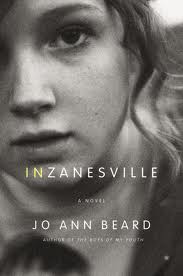
In Zanesville by Jo Ann Beard
A story about the friendship of girls that not only didn't make me want to hurl, but was wise and sweet in a way that surprised me and filled me with, what was it? Joy.

The book opens with the crisis moment in what must be the must under-compensated babysitting job ever. The first paragraph sets the tone well: "We can't believe that the house is on fire. It's so embarrassing first of all, and so dangerous second of all. Also, we're supposed to be in charge here, so there's a sense of somebody not doing their job."

The glorious descriptions of the ordinary desires (like Nehru shirts and tweed culottes on layaway, a feeling of belonging, kittens) and annoyances (like disappointing drunk dads, teenage sisters and slippery babysitting charges) of the main character enhance the simple story in a very satisfying way. Plus, it was sneaky, funny and sweet.


Silver Sparrow by Tayari Jones
Once a week or so I hit the kitchen at my office job, get some tea and look at the castoff books on the counter. Usually populated by ghostwritten memoirs and diet books, this pile has yielded a few great finds. The best? This book.

Normally I wouldn't pick up a book with a comfy blue cover and an anonymous lady in an ugly dress but the name tickled my memory. Back at my desk I googled Jones and a review on HTML Giant by Roxane Gay came up: "This is another one of those books I want to just drive down the street throwing at people because it feels so necessary." When the mighty Roxane Gay wants to fling something at you, you cup your hands, ready to catch it.

Silver Sparrow is about two girls, fathered by the same man, one secret, one "legitimate." I am not telling you anything you won't find out right away. The first line of this book is "My father, James Witherspoon, is a bigamist." Despite the fact that the secret that is central to the story being open to the reader from the get go, there was something brisk and thrilling about the plotting that made me fly through it. The story is told through the voices of each sister, and through them, and tales within tales, Jones makes achingly sharp observations about family, the legacy of sexual violence, sacrifice, anger and power. I also like the details of 80's Atlanta that come through in the girls' assessments of one another.

Zazen by Vanessa Veselka
When I think of this book my chest tightens and I remind myself to just breathe, just breathe and be glad that writers like Vanessa Veselka are getting published in my lifetime. It is that good.


Zazen is a punch-in-the-chest kind of book about radical politics, failure, mental illness and, eventually, hope. It conjures up visions of a near future with images from the present, recognizable to anyone who, let's say, ever lived in a communal house or when vegan or demonstrated outside a business, full of righteous anger. Or maybe just lived in a place like Portland or San Francisco after the shine of "alternative living" wore off. This book is for all the fallen true believers out there who still hold a tiny sliver of hope in their hearts, a sliver that never gets to glint in the light and causes more aching than they'd like to admit.

One of the more surprising things about the book was Veselka's use of the sibling relationship to fully develop the main character, Delia, and subtly provide back story without straining the first-person framework. Delia's feelings about her brother and sister are complex and true, and given weight that I rarely see and greatly appreciated.

Fantastic Women: 18 Tales of the Surreal and the Sublime from Tin House edited by Rob Spillman
I picked up this collection on an evening that I promised myself that I would not buy a book. That night, however, I really needed to be transported to another world, any other world. This book, a staff pick at The Spiral Bookcase, is filled with some of the best writers working today, including: Lydia Millet, Kelly Link, Lucy Corin and Samantha Hunt.

Relationships rub the wrong way, Drive-Through-House cookie recipes are tested, skin is shed and children feared in these stories. My favorites get at the strong crypto-currents of emotion behind everyday things like family, work and love. "Drive-Through House" by Julia Slavin is the first that comes to mind. A take on familial obligation, the story captures the dust and exhaust flavor of a dying roadside attraction and the cramped sadness of being afraid to leave a house that has no door.  "Snow White, Rose Red" by Lydia Millet, which I read first last year in Kate Berheimer's collection My Mother She Killed Me, My Father He Ate Me, is a juicy story told from the point of view of a "disappeared" man, a sort of house-breaking hobo, with a slightly sinister unreliability: "I met the girls and instantly liked the girls, Of course I liked the girls." "Americca" by Aimee Bender asks if memories are gifts and answers that growing up is a kind of loss no matter what.

The superb choice of stories in this collection inspired me to purchase two other Tin House collections and seek out the novels they've published. That says it all, I presume?

Tuesday, November 13, 2012

So I bought a YA novel by a science fiction author I am trying to get into. Most of the blame should rest on my lack of close reading of the cover copy, but the fact that the design of this book for teenagers is indistinguishable from those marketed to adults says a little something about the genre.

Boo.

That is all.

Friday, September 28, 2012

trip book style

I took a most relaxing vacation. I missed SPX and the Brooklyn Book Fest and Theo Ellsworth and everything, but I promise that I did my part in between redwoods, oaks, MUNI, METRO and fish watching and fish breakfasts.

blurry enough?
Since we stayed in Silverlake for two nights, I had to check out Secret Headquarters. I barely made it ot of there with adding tens of pounds to my already book-laden luggage. Because I cannot drive I must walk and this sends me to Fairfax when I am in L.A. Not only does the lovely and talented Chez Mo live very near, but the Farmer's Market, Family Bookstore and Cinefamily are all on the row. Nothing grabbed me at FB, but I paced and dug until I pulled up HAV by Jan Morris. The intro by scifi legend Ursula K. LeGuin sold it.

When several people tell me that I'll just love something, I start to feel a little uneasy. This usually means that the something is something horrible. I guess I just give off that vibe.  So, when we hopped on the Expo line to Culver City I was a little apprehensive. The Museum of Jurrassic Technology did not disappoint, however.  I picked up No One May Ever Have The Same Knowledge Again: Letters to Mount Wilson Observatory 1915-1935, edited and transcribed by Sarah Simons. This book not only arouses the urge to write letters, but also contains some sweet telegram spam:


Most of the time between LA and SF involved nature and driving and basking. I read my airport-bought The Night Circus by Erin Morgenstern. It was sufficiently distracting, but ultimately bloodless, despite pretending to be a romance. I spent most of my time breaking into a new journal with entries describing warm weather, drawing pictures of my luggage and listing the various plants I saw that day for our leather-clad, cyborg, future kids.

I finished The Night Circus by San Francisco. At Borderlands Books, I traded it in for a bit of credit and picked up the anthology Firebirds Rising edited by Sharyn November and the Tachyon Press chapbook A Flock of Lawn Flamingos by Pat Murphy. Firebirds Rising is YA, an unpleasant surprise that I could have avoided with a closer reading of the cover. The troubled teens helped pass the flight back and included two stories that I really liked by two weirdo masters: "Quill" by Carol Emshwiller and "The Wizards of Perfil" by Kelly Link. A Flock of Lawn Flamingos was a sweet and simple ode to troublemakers. I read it on the way to work my first day back to Midtown, letting the story take me back to California.

Now that I am back, life has taken a sad and shitty turn, so I especially relish the worry-free reading and writing time I had.

Tuesday, August 14, 2012

get in my ears

Authors like Catherynne M. Valente, Elizabeth Bear, Tobias Bucknell, Lavie Tidhar, Genevieve Valentine and more populate Clarkesworld. I'm not sure how I missed the way there for so long, especially with all of the recasts by my favorite scifantastic podcasts. Anyway, I subscribed to the podcast a few days ago and haven't really stopped listening since. As you know, I love closing my eyes, just me and the story. Podcast director Kate Baker reads many of the stories and she brings a lot to each. Here are some to start out with:
If you've ever known a true believer: Semiramis by Genevieve Valentine
If you've hated on your body: Worm Within by Cat Rambo
If you've ever played a player: Clockwork Chickadee by Mary Robinette Kowal

Check out the magazine for more stories, cover art, essays and interviews. They pay their authors--another reason to support them.

((((((((())))))))

I've also been listening to 99% Invisible, hosted by Roman Mars. Ostensibly an architecture podcast, the short episodes almost always get into culture and personality, too. I loved to episode on Galloping Gertie, the killer bridge!

((((((((())))))))

Are you generally a genre lover? Do you like smart artists? If so you should also subscribe to the woefully under-updated Make Believers podcast, hosted by Alexa Rose and Ming Doyle. Even though they sometimes they talk about astrology and superhero comics, I am always excited for a new episode. Hat tip to friend of try harder Simon Häussle for recommending it to me!

Monday, June 04, 2012

Looking for a safe space to have a vagina

I listen to a lot of podcasts. I love to let my eyes leave the screen for a while and let my brain grapple with information in another way. It’s generally a very enjoyable way to spend time.

As I recently prepared my place for guests, I clicked on the science fiction cast StarShipSofa #240 to make the cleaning go faster. Everything was going great, as usual, until J.J. Campanella’s Science News. His intro to the first story began, as you may remember like this: “The first story of the night may make the male part of the audience a bit uncomfortable because it has to do with, well, female plumbing, so to speak. So if you have kids listening or are just uncomfortable about the topic you may want to skip ahead about five or six minutes to get beyond this particular story. So what is this anti-macho, squirm-inducing story?”

The answer to that is: a very technical story about the human microbiome, specifically that of the vagina.*

This embarrassing intro not only undercut the cool science of the story but it also made me feel incredibly angry and sad. Here’s why:  First it suggests that male audience members are so immature as to find a rather dry (though interesting) story about vaginas somehow unlistenable. StarshipSofa often includes stories where men and women fuck each other, most often, vaginally—including the story before this one. So imagining a vagina is cool if we’re talking sex, but if we are talking science, it’s gross? Way to reinforce negative stereotypes of science fiction fans, Dr. Campanella, while undercutting your own science reporting at the same time! At its most innocuous, this kind of intro panders to the immature and close-minded, more insidiously, it provides support to the idea that it is totally reasonable to think that women’s bodies are gross, that it's okay, if you are a man, to be ignorant of the non-sexual aspects of the vag.

And, worse than gross, apparently “the topic” is unsuitable for children. Considering half of those hypothetical kids have vaginas themselves, this idea is absurd at best. It is definitely a pretty terrifying statement about how many people conceive of reproductive organs, especially those of women, as shameful, embarrassing, and most importantly, a dirty secret. If you, as a parent, are not comfortable with your kids knowing about their own bodies, or them hearing the correct terms used for their parts, then you are failing in your job. Frankly, any parent listening to a podcast aimed at adults, full of violence and other adult situations, with their children better be prepared to answer much more challenging questions than “What’s a vagina?”

Even though the terms “anti-macho, squirm-inducing” are thrown out a with a little cheek, it is still incredibly disappointing to hear SSS’s science correspondent use those words to describe a story about a part of half of the population’s bodies. Why do I have to hear this shit on a podcast dedicated to the world of the fantastic, fiction or fact, where anything is supposedly possible?

* Here's the article: P. Gajer, R. M. Brotman, G. Bai, J. Sakamoto, U. M. Schütte, X. Zhong, S. S. Koenig, L. Fu, Z. (. Ma, X. Zhou, Z. Abdo, L. J. Forney, J. Ravel, Temporal Dynamics of the Human Vaginal Microbiota. Sci. Transl. Med. 4, 132ra52 (2012).

Monday, October 17, 2011

Excellent mail day:
I've been waiting for this for several years. Now it is here and I am going to wait until the weekend to read it, as an incentive to get it together.

What I am trying to say is: HOORAY!