Pages

Sunday, June 23, 2013

Dottie!

Meet Dottie!

Dottie is a 3 year-old, petite pit mix with an unusual spotted coat and beautiful golden eyes. At 48 lbs., she's a great size for any home. She loves toys, going to the dog park, playing ball, car trips and exploring. She also loves learning tricks and will delight you with how quick she learns!

She is a little shy at first, but once she warms up, she is a loyal, loving friend. Give her your time--she is worth it!

She is wary of small children and cats, though, and should go to a home without them.

Dottie is housetrained, crate-trained, spayed, and up-to-date on her vaccinations.

Check her out at Sugar Mutts Rescue: sugarmutts.com or call 646-732-3795.


Saturday, June 22, 2013

Cartoon Picayune #5--Summer 2013 edited by Josh Kramer

Reading Emi Gennis' site, I saw that she was coming out with a new nonfiction story called "Radium Girls." From the teaser it seemed to be filled with drawings of old-timey ladies and gross medical stuff, two of my favorite things, and so I knew I would have to track it down.


The story, "Radium Girls," covers the media scandal and resulting trial against Radium Dial, a U.S.-based clock company. Gennis pulls out great details from the transcripts, like "Factory managers told them not to worry if they swallowed a bit of radium-- that it would 'make their cheeks rosy, '" that show the chilling indifference of this particular company and some of the horrific side effects of capitalism. Gennis balances distinctive features with an every-woman look that gives he girls humanity without sacrificing their emblematic nature. That is hard to pull off in a comic with such little dialogue.

The rest of Cartoon Picayune #5 was just as satisfying. The editor's letter covers the development of the Picayune over the years, and, as a first-time reader, this was super interesting to me. I always like to know how the issue I am reading relates to the series. Would I have liked to see the letters section after the editor's letter or on the last page? Yes, but that might be just the traditional magazine editor in me wanting to make sure that everything important can be found.

In the other feature, "Sex Workers of the World, Unite," author/illustrator Andy Warner covers the world of California sex worker rights by explaining concepts such as decriminalization and legalization and introducing us to some of the personalities involved, such as organizer Maxine Doogan and writer/activist/prostitute Carol Leigh. I love how he draws attention to the various settings where sex workers' rights come into play--the strip clubs, the streets, protests and press conferences--moving the story through any preconceptions the reader might have about where, and to whom, these rights matter. The way the talking head panels are drawn is really engaging; the emotions of the speakers in those moments really come through.

The short pieces, "Feeding the Meter" by editor Josh Kramer and Erik Thurman's "Seoul Grind" were less interesting to me, probably because food carts and coffee places are lower stakes than death and (possible future) taxes.

I love Pat Barrett's covers, especially the six-panel of portraits on the reverse. His drawings always feel somehow irrepressible, as if the energy behind the images is going to burst out of the page. I wish the healthcare worker had gotten the cover--she seems to embody the forebearance required for all work.
 
Speaking of the theme of work, the Cartoon Picayune pays, which is even more of a reason to support them. Cheap subscriptions are available!

Dottie the foster dog!

After the nightmare of medical Switzerland, I decided that it might be nice to foster a dog again.  Luckily I discovered that a bunch of the dogs in the ACC have videos made for them that you can access through Urgent Pets on Death Row and Facebook. I am a sucker for spotted ears, and after seeing this girl's love of playing ball, I had to see if she was still available.

Meet Dottie! Dottie is a 3 year-old pit mix with an unusual spotted coat and beautiful golden eyes. At 51 lbs., she's a great size. She loves toys, playing ball, sniffing and exploring. She likes to be near us at all times, but not right on top of us, unlike our last foster. She doesn't seem to have any separation anxiety either, which is great for those that don't work at home.

Right now she has mild kennel cough, so she can't meet 'n' greet other doggie friends, but she seems interested.

Here is her listing on Sugar Mutts, the rescue that pulled her from the ACC for us.
Here is the video that won my heart.


Monday, June 10, 2013

Thursday, May 30, 2013

Booking in Basel

I scrambled to pack for this weird trip to Basel. I am accompanying my father for a cancer treatment, watching him, nursing him, etc. What a time to read, right?

I struggled to bring books that were both absorbing and light, in both senses. I ended up with:
 The Bloody Chamber by Angela Carter
Honored Guest by Joy Williams
The Skating Rink by Robert Bolano
Twin Time or How Death Befell Me by Veronica Gonzalez
Conjunctions 59: Colloquy (much less depressing than Conjunctions 60: In Absentia)

So far The Bloody Chamber was an, um, unfortunate choice. Angela Carter's psychosexual fairy tales might be great for a rainy night with a lover or enemy, but they are not so great for long nights spent in bed with your ailing Dad. Honored Guest is better so far, projecting a sense of strangeness, unease and hope that better suits my circumstances.

As for comics, the Cartoonmuseum Basel is closed for the time I am here. Boo. Anyone have tips for comics satisfaction in this town?


Friday, May 10, 2013

your public face is broken

One of the things that I promised myself when I started this blog was that I would never be afraid to write about the complete shittiness of depression or grief. If you are wondering why I would be afraid then you have never applied for a job knowing that you will be Googled. Or maybe you've never has so few good days that you don't want to ruin one by thinking about why you have so few good days.

Here are two amazing pieces, posted yesterday, on what happens when life is something you suffer through rather than live. Improvising a Bone Graft by poet Nikki Reimer is deft examination of public grief and private pain. Let's just say that I identify: I loved my brother with a fierceness that is not ashamed to stand howling and naked in the middle of the road, and what I miss is the material essence of him. The only thing in the world that I want, and can’t have, is my brother’s arms around my shoulders, his infectious laugh, his shit-eating grin, his middle finger pointed at me in response to sisterly teasing. His “jerkface!” in response to my “jackass!”

Depression Part Two by Allie Brosh is both a hi-lar comic and the most apt description of chronic depression I have ever read: Months oozed by, and I gradually came to accept that maybe enjoyment was not a thing I got to feel anymore. I didn't want anyone to know, though. I was still sort of uncomfortable about how bored and detached I felt around other people, and I was still holding out hope that the whole thing would spontaneously work itself out. As long as I could manage to not alienate anyone, everything might be okay!

You might want to read the first part first. Check the dates of the posts to get a sense of the cyclical devastation even those who are treated experience. Wait, that doesn't sound funny at all! I promise you will laugh (or at least approximate the sound with your mouth).

Monday, May 06, 2013

Meet me by the angel, or travel

30th Street Station will always be my favorite. I've looked at its soaring ceiling while waiting for my father to come home, while fleeing my brother's death, while trying to warm up or cool down on yet another journey. I am small and large, young and old in that place. In the midst of such transmigrations, I've got a lot of reading done in 30th Street.

Last time I was there, days ago, I decided to check out the station's bookstore. Though I was nicely prepared for my trip with a few issues of I Love Bad Movies and a copy of lost traveler Cookie Mueller's Walking Through Clear Water in a Pool Painted Black, I figured that I'd kill some time away from the ghost smell of McDonald's past. Amid the usual magazines and Victorian porn novels, the bookstore carries Tin House, displays Two Dollar Radio and other small pub books, and boasts a decent sci fi and short story section.

Debating whether to buy a (gasp! full-price) novel, I headed up to the counter, behind which the several staff members screamed catchphrases at one another in a jovial manner and avoided eye contact. Hmm. The door looked locked. "Are you closed," I asked. "Yeah," grunted the security guard.

After all, no matter how good the surprises, it is still Philadelphia.

###

A new thing that the New Jersey Transit train has been doing is being a time machine. Before every stop the speakers emit the strangled warble of a dial-up modem before announcing that you are not as close to your destination as you thought. No superhighway, then or now.

###

It is no secret that the anachronistic nature of train travels is part of the appeal. Despite today's florescent lights we can all be an incognito heiress or a man on the run on the train from big city to bigger city. There are always people to watch. If you are lucky, layovers include not only a reasonable bathroom but also food made by a human. The newly remodeled (well, new in the timeline of government and memoir) Trenton train station has both of those things. Despite my love of old things, I am so glad that the former Trenton transit center is gone, taking all of those chicken grease, brown-lit, bad boyfriend memories with it.

Thursday, April 25, 2013

MoCCA 2013

Due to everything else you read about on this blog,  I was really thinking of skipping MoCCA this year. I did skip Saturday--a very good idea considering how much life stuff I got done.

On Friday I hit up the hic + hoc party here in my neighborhood. I thrust B at Matt Moses and got the hard sell on Tumblr from Alabaster. I picked up the Unknown Origins & Untimely Ends: A Collection of Unsolved Mysteries anthology, edited by Emi Gennis, and then sat at the bar trying to tell B who people were in an unintelligible undertone.

Hot foot
On Sunday I put on my walking shoes, grabbed my camera and made my way to Murray Hill. The entry was still $15 for the day and still too expensive. The $5 for the show's brochure was laughable. I busted a chuckle when the poor MoCCA volunteer let me in on that great deal!

After I completely lost my shit over the OMG CURTAINS, like any sane person would, I noticed that the armory was not too crowded. I tend to list like a sinking ship when I am in crowds so this airiness allowed me to bump into many fewer people than normal. I didn't hear a ton of bitching about it being a "bad MoCCA" or anything; many books sold out before my eyes from big publishers and one-man-bands alike. Since cartoonists love to bitch, I am going to take this as a good sign.

As usual, I missed all panels. Sadly, good intentions rarely trump oversleeping and general reluctance to force a smile. One of these days! Was that even worth saying? Well, no, not really, but I already typed it and this needs to get out before next year's MoCCA.

The back of the space was set up as a mini-gallery of the Society's collection (formerly the Museum of Cartoon and Comic Art's holdings?). I loved the interaction between old newspaper work and new stuff. I was psyched as usual to see Eleanor Davis's work, originals from In Our Eden. Some other standouts for me were Nora Krug, Adam McCauley, Miriam Katin (who Robin interviewed at inkstuds recently) and Natalya Balnova, whose work reminded me of Wendy MacNaughton's illustration.

The schools were out in full force. There was a ton of amazing student work available from usual suspects SVA and CCS as well as some surprises, like Kutztown University.  I was especially intrigued by SAW's table. They ran out of the awesome-looking student anthology, but I did pick up a 3-part mini by visiting instructor Ron Rege because I was told it was about grief.

And now on to the only part that anyone cares about: The pictures! Help me fill in the blanks.
Intrepid concession workers
Happy crew: Pat Barrett, Aaron Cockle and L. Nichols
Every year I take a picture of Three-Armed Squid and every year I miss a member. Pictured here: Estrella Vega, Alden Viguilla and Alexandra Beguez
Guest of honor Jillian Tamaki
Happy crew member Darryl Ayo says Hi!
Whit Taylor likes plants and doesn't deserve this horrible photo
CCS-er Amelia Onorato sells selkie stories
Greg Means says he can find pictures of my face on the internet. He means it!
Nikki Desautelle. I wish I had picked up more here!
Award-winner Kenan Rubenstein and Neil Brideau battle comics ennui
Gabrielle Bell choosing not to hide while doing a sketch for me.
Mark Delboy sold me Pizza & Sex but I didn't tip
Sabrina Elliott, Jensine Eckwall and Dilek Baykara present a united front

Yao Xiao,  Judith Kim and Judy Wong(?) are consummate saleswomen
???
Ran out of money then ran into Katz Sisters and Andrea Tsurumi. Bad timing.

My haul
My tip top item: This letterpress print by Nikki Desautelle
So what was your pick from the show?

Monday, April 15, 2013

lady friends

The Hearing Trumpet by Leonora Carrington is a celebration of unstereotypical womanhood, the freedom of aging and the power of friendship. I reviewed it here. I loved it, loved the experience of sharing it, loved the avenues of research it led me down. I especially loved Carmella, the narrator's best friend, and her easy relationship. I never realized that, while the narrator was the author's projection of herself as an impossibly old woman, Carmella had a real-life counterpart as well: artist Remedios Varo.

The women were both artists. They were both muses to cranky Surrealists. They both ran from the war and ended up exiled in Mexico. They were both held against their will--Carrington in a mental institution, Varo by the French police. They both had spectacular, hard lives, and probably found some comfort in the partial reflection of that reality in one another.

I learned about Varo in the great essay, How To Be Old: Two Women, Their Husbands, Their Cats, Their Alchemy, by Carrie Frye over at The Awl.* The essay focuses on the biography of the two women, how they intersect and how their friendship appears in each's writing, mostly The Hearing Trumpet. I called Carrington's language in that book "precise [and] pulsing;" Frye calls it "a kind of glissading bumptious kangaroo splendor." That assessment endeared her to me, along with her assertion that the writing in The Hearing Trumpet seems to impart the desire to make people happy, instead of to impress them.

All of this is to say that I want to read more of Varo's writing and see more of her amazing art. You should read this essay and follow what it makes you want to do.

*(But why is the title of the page "A History of Cat-Loving Women?" That is the worst.)

Tuesday, April 09, 2013

meta mail

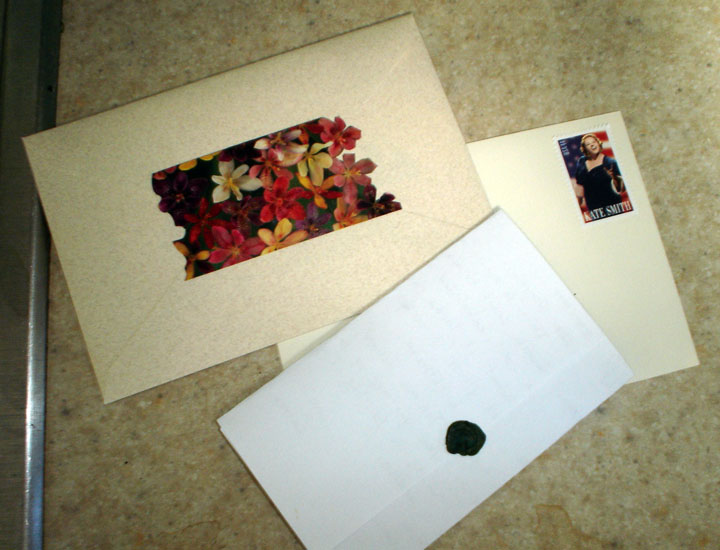
The USPS charges shipping on stamp purchases. Laughter and tears, folks. Laughter and tears.

Friday, April 05, 2013

Eye of Horus by Alabaster

Oh to be an ibis in the grass in Alabaster’s Egypto-trip through dysfunctional family dynamics! A primer of sorts on the god Horus’ origins and exploits, this comic follows the titular god as a child. He hangs with his companion cat, Bast, heals hurt birds, dodges his murderous uncle and learns the secrets of his lineage.

Look at that wheat!
Originally printed in two parts for the Portuguese magazine Lodaçal Comics, this version is a limited edition of 75. The lovely letterpress cover shows Alabaster’s usual attention to craft; I especially like the triumphant ibis on the reverse. The black and white, copier paper, interior mixes traditional comics panel structure with full-page tableaux that echo the frozen depictions of ancient Egyptian gods but somehow keep them fluid. It is in these panels that you can best see Alabaster’s commitment to the decorative detail.

 I was a bit surprised that she didn’t wring more bitter humor out of the terror and misery of young Horus, as the suffering of child-like characters is central to her Talamaroo stories. (See my review of those here.) We don’t get to know too much about the boy, except that he is a nice, sheltered kid with sweet bangs and big battles ahead of him. The meatiest character in here is the evil Seth—I could practically smell the stink coming off of him; but then fleshing out personalities is perhaps the trickiest part of retelling ancient tales. Despite the small deficit in personality-based tension, there is still plenty of blood, sweat and eyeliner-stained tears in this story to keep me hoping for a next chapter some time soon.

Thursday, April 04, 2013

some good things

"Attached to the box was a label that said: "Do not open until war is over." Which war? The Civil War? The War of 1812? What he discovered was a box filled with disguised anti-Nazi tracts hidden in packets of tea and shampoo and concealed in miniature books both popular and scholarly."
I always forget about the NYPL's blogs and then there they are, pointing me to amazing object, books or trains of thought and inspiring great ideas.

New plants are patented each week. Who knew? Here are some color pictures of them.
Additionally, prison libraries are covered more than I expected in a few of the blogs.
Also, a bunch of pictures of Christopher Walken!

xxxxxxxxxx

I really enjoyed this essay on book reviews, the desire to hurt/ignore/erase any "girl who fucks" and this: "I don’t want to write about rape anymore. But here we are." Trigger Warning by Sarah McCarry

Wednesday, March 20, 2013

The Public Life of Bees by Jessica Campbell

“Bee people—let’s face it, they are crazy about bees!” Now, I admit to liking bee imagery, which is what drew me to the zine in the first place. But I don’t think I qualify as a “bee person.” I am, however, an Oily Comics person and The Public Life of Bees is a black and white, quarter-size zine from their sweet dollar menu.

The text reads like into a lawnmower went several dry scientific tomes on bees, a couple of early-internet apian fan sites and maybe a yellowing copy of Weekly World News and what shot out was pieced back together by a madwoman.

It’s a quick read made charming by the drawings of Campbell, a painter. I especially like the beekeepers’ (bee people?) masked exchanges: ‘Jerry, are you a zombie?” ‘Naw, bro, I swear I’m not!”

Tuesday, March 12, 2013

you send me comics

Any idea what book this image is from?
First of all, the blog over at the The Billy Ireland Cartoon Library & Museum is an amazing resource for comics lovers, especially if your tastes skew vintage. My favorite feature is "Found in the Collection" because it indulges the fantasy that working in an archives is an exciting adventure of discovery--the same fantasy that led me to get my MLIS, but perhaps that is another story for another time.

I missed Found in the Collection: E. Simms Campbell Letters when it was first posted, so it is old in internet time. The E. Simms Campbell Letters are, of course, timeless, as all good letters are. The writer, Elmer Simms Campbell, was not only the creator of the Esquire magazine mascot, but a working, African American, NYC cartoonist from the 1930s to his death. The letters speak to the cartoonist lifestyle, one of all-nighters, deadlines, loneliness, but also some pretty epic partying, life in 1950s Switzerland and the habits of some prominent jazz musicians. Reading them in full would be pretty much the best thing. Researchers, take notice!

^^^^^

Loved the interview with Ellen Forney over at inkstuds. They cover working in memoir, coming out as mentally ill, deadlines, drugs and doctors. I want to read Marbles, which I didn't want before I listened.

I simply like listening to Forney. Her verve for life is infectious and that is something I desperately need to catch. Her previous interview with Robin made me feel the same way.

^^^^^

From LWA
A postcard interview is one of the best things I've heard about in a long while. I am doing a postal-related interview for work and if deadlines were not an issue, this would be an amazing treatment. If only, if only.

Monday, March 11, 2013

The best moment of the weekend came at the very end: Almost-nine-years-old A on the yellow couch, reading Melissa Mendes' yellow Freddy Stories and laughing while the oldsters around her tried to caught our breath. I was going to take her picture, but there is something to be said for not having to model one's enjoyment.

Thursday, March 07, 2013

"florists on the edge"

Nothing here is the thing I want.

I've been reading some back issues of Cactus and Succulent Journal that I picked up for a friend and never gave her. Succulent enthusiasts have a lot of drive. I've not been reading the comics and books I stocked up on to get through this long winter. I got to use some of my newfound cactus knowledge in an article I am writing for my day job, so there's that.

I am working on a series of collages for a zine about my friend Sally. Will it be done in time for _______? Will it ever be done? This is what I think about when I think about grieving or projects. It will certainly include a page of flowers. She loved flowers and I love flowers and flowers, flowers, flowers. I thought of this treatment while considering why I was so drawn to the Cactus and Succulent Journal, so there's that.

I've been listening to a ton of genre story podcasts. They get me through days working at home or puttering nights. Maybe not on the page, but I like ghost manifestations, fairy machinations, hodgepodge time and place, and such right in my ear. When I do venture out of my lair I read HAV by Jan Morris, which fits into my desire for wispy realities, so there's that.


Saturday, February 23, 2013

postcards: here and there

Help Vermont collagist and Post Office owner Jane Davies keep her little P.O. open by sending her a handmade postcard! I suppose that you could help by sending a letter to anyone in Rupert, VT, but on the off chance that you don't know any one of the 704 or so citizens, the Postcard Project works just fine. Check out the galleries of cards that she's already received here. If you don't at least click through to see the postage-stamp-size building, you have no heart.


If you have the misfortune of being in the Boston area, you could relieve some of that pain by visiting the MFA for The Postcard Age, and exhibit of selections from the Leonard A. Lauder Collection. The collector himself will be doing a talk on his collection on March 6th. While you're there, hit up the European Posters exhibit too.


Leonard Lauder also has a collection housed at the NYPL. The Detroit Publishing Company Postcards are available to view online and show mostly cityscapes, landmarks and natural beauty, but also things like this:
Image ID: 62237
To see them, click on the tiny "See all images" link on the upper part of the page.

Monday, February 11, 2013

These essays at The Rumpus on mental illness are necessary:
Sick by Amy Butcher
That's Life by Seth Fischer
Through the Cracks by Sue Sanders

And these interviews with people who make things are very different and very interesting:
The Rumpus Interview with Natalie Dee by Jory John
The Rumpus Book Club Discussion with George Saunders

###

Sometimes you order Breaking & Entering by Joy Williams from the internet and end up with a Lemony Snickett book but nothing else is wrong right at the moment.

###

The only thing that makes the cancellation of Saturday delivery by the USPS not entirely heartbreaking is that it will make Mondays somewhat more exciting.

Let's all make someone's week's beginning better by writing them a letter. (New slogan possibility? Send check to P.O. Box 170293, Times Plaza Station, Brooklyn, NY, 1217-9997)

My young pen pal is on the list for this week; who is on yours?

Thursday, February 07, 2013

Best I Read: 2012

Somehow I managed to not write about any of the books that blew me away this year. I would suggest that you get your hands on a copy of each one.

Dora: A Headcase by Lidia Yuknavitch
"Only one thing to do. I puke."

Most people who know me know that my least favorite genre is coming-of-age. I was a teenager once--first times don't fascinate me. Stories about troubled girls are usually so hackneyed and embarrassing that no feeling but disgust rises to the top. So this book by Lidia Yuknavitch seems like the worst thing: a modern retelling of a Freud case study, told in first-person by a teenaged girl named Ida.

The reason that Dora works so well, or at all, is Yuknavitch's excellent grasp of voice.  Ida's voice, reclaimed from the big cigar himself, is reimagined as a present-day patios of swears, nicknames and certain hallways of pop culture. It took me a few chapters to trust Yuknavitch and let myself be transported back to a time when anything was possible and nothing seemed worth doing, but the clarity with which she shows Ida's conflict brought me around. There is a respect for the potential power, positive and negative, of teen energy that I rarely see, and the deep knowledge that what looks like rebellion can sometimes simply be self-saving.

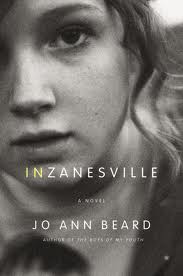
In Zanesville by Jo Ann Beard
A story about the friendship of girls that not only didn't make me want to hurl, but was wise and sweet in a way that surprised me and filled me with, what was it? Joy.

The book opens with the crisis moment in what must be the must under-compensated babysitting job ever. The first paragraph sets the tone well: "We can't believe that the house is on fire. It's so embarrassing first of all, and so dangerous second of all. Also, we're supposed to be in charge here, so there's a sense of somebody not doing their job."

The glorious descriptions of the ordinary desires (like Nehru shirts and tweed culottes on layaway, a feeling of belonging, kittens) and annoyances (like disappointing drunk dads, teenage sisters and slippery babysitting charges) of the main character enhance the simple story in a very satisfying way. Plus, it was sneaky, funny and sweet.


Silver Sparrow by Tayari Jones
Once a week or so I hit the kitchen at my office job, get some tea and look at the castoff books on the counter. Usually populated by ghostwritten memoirs and diet books, this pile has yielded a few great finds. The best? This book.

Normally I wouldn't pick up a book with a comfy blue cover and an anonymous lady in an ugly dress but the name tickled my memory. Back at my desk I googled Jones and a review on HTML Giant by Roxane Gay came up: "This is another one of those books I want to just drive down the street throwing at people because it feels so necessary." When the mighty Roxane Gay wants to fling something at you, you cup your hands, ready to catch it.

Silver Sparrow is about two girls, fathered by the same man, one secret, one "legitimate." I am not telling you anything you won't find out right away. The first line of this book is "My father, James Witherspoon, is a bigamist." Despite the fact that the secret that is central to the story being open to the reader from the get go, there was something brisk and thrilling about the plotting that made me fly through it. The story is told through the voices of each sister, and through them, and tales within tales, Jones makes achingly sharp observations about family, the legacy of sexual violence, sacrifice, anger and power. I also like the details of 80's Atlanta that come through in the girls' assessments of one another.

Zazen by Vanessa Veselka
When I think of this book my chest tightens and I remind myself to just breathe, just breathe and be glad that writers like Vanessa Veselka are getting published in my lifetime. It is that good.


Zazen is a punch-in-the-chest kind of book about radical politics, failure, mental illness and, eventually, hope. It conjures up visions of a near future with images from the present, recognizable to anyone who, let's say, ever lived in a communal house or when vegan or demonstrated outside a business, full of righteous anger. Or maybe just lived in a place like Portland or San Francisco after the shine of "alternative living" wore off. This book is for all the fallen true believers out there who still hold a tiny sliver of hope in their hearts, a sliver that never gets to glint in the light and causes more aching than they'd like to admit.

One of the more surprising things about the book was Veselka's use of the sibling relationship to fully develop the main character, Delia, and subtly provide back story without straining the first-person framework. Delia's feelings about her brother and sister are complex and true, and given weight that I rarely see and greatly appreciated.

Fantastic Women: 18 Tales of the Surreal and the Sublime from Tin House edited by Rob Spillman
I picked up this collection on an evening that I promised myself that I would not buy a book. That night, however, I really needed to be transported to another world, any other world. This book, a staff pick at The Spiral Bookcase, is filled with some of the best writers working today, including: Lydia Millet, Kelly Link, Lucy Corin and Samantha Hunt.

Relationships rub the wrong way, Drive-Through-House cookie recipes are tested, skin is shed and children feared in these stories. My favorites get at the strong crypto-currents of emotion behind everyday things like family, work and love. "Drive-Through House" by Julia Slavin is the first that comes to mind. A take on familial obligation, the story captures the dust and exhaust flavor of a dying roadside attraction and the cramped sadness of being afraid to leave a house that has no door.  "Snow White, Rose Red" by Lydia Millet, which I read first last year in Kate Berheimer's collection My Mother She Killed Me, My Father He Ate Me, is a juicy story told from the point of view of a "disappeared" man, a sort of house-breaking hobo, with a slightly sinister unreliability: "I met the girls and instantly liked the girls, Of course I liked the girls." "Americca" by Aimee Bender asks if memories are gifts and answers that growing up is a kind of loss no matter what.

The superb choice of stories in this collection inspired me to purchase two other Tin House collections and seek out the novels they've published. That says it all, I presume?

Monday, January 28, 2013

All of this "coping," all of this "getting by," all of this "day by day" has turned me towards writing poetry. One of my open secrets is that I wrote poetry for many years, most of it lost now. The way that scraps of thought could be fixed by a poem was very soothing to me. I am soothed again by that now. Well, perhaps soothed is the wrong word, marginally satisfied is probably better. I can pin down the small truths and then let them rest.

I keep starting essays about grief and end up with poems. Maybe it is the sudden lack of perspective I am suffering from, but a poem seems like an option now in a way that it hasn't in a long while. I don't know how I feel about this except that any writing is better than none.

<<<>>>

Does what you write, or how you write it, change when your circumstances change? How?