Somehow I managed to not write about any of the books that blew me away this year. I would suggest that you get your hands on a copy of each one.
Dora: A Headcase by Lidia Yuknavitch
"Only one thing to do. I puke."
Most people who know me know that my least favorite genre is coming-of-age. I was a teenager once--first times don't fascinate me. Stories about troubled girls are usually so hackneyed and embarrassing that no feeling but disgust rises to the top. So this book by Lidia Yuknavitch seems like the worst thing: a modern retelling of a Freud case study, told in first-person by a teenaged girl named Ida.
The reason that
Dora works so well, or at all, is Yuknavitch's excellent grasp of voice. Ida's voice, reclaimed from the big cigar himself, is reimagined as a present-day patios of swears, nicknames and certain hallways of pop culture. It took me a few chapters to trust Yuknavitch and let myself be transported back to a time when anything was possible and nothing seemed worth doing, but the clarity with which she shows Ida's conflict brought me around. There is a respect for the potential power, positive and negative, of teen energy that I rarely see, and the deep knowledge that what looks like rebellion can sometimes simply be self-saving.
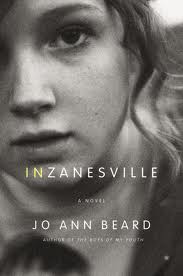
In Zanesville by Jo Ann Beard
A story about the friendship of girls that not only didn't make me want to hurl, but was wise and sweet in a way that surprised me and filled me with, what was it? Joy.
The book opens with the crisis moment in what must be the must under-compensated babysitting job ever. The first paragraph sets the tone well: "We can't believe that the house is on fire. It's so embarrassing first of all, and so dangerous second of all. Also, we're supposed to be in charge here, so there's a sense of somebody not doing their job."
The glorious descriptions of the ordinary desires (like Nehru shirts and
tweed culottes on layaway, a feeling of belonging, kittens) and annoyances
(like disappointing drunk dads, teenage sisters and slippery babysitting
charges) of the main character enhance the simple story in a very
satisfying way. Plus, it was sneaky, funny and sweet.
Silver Sparrow by Tayari Jones
Once a week or so I hit the kitchen at my office job, get some tea and look at the castoff books on the counter. Usually populated by ghostwritten memoirs and diet books, this pile has yielded a few great finds. The best? This book.
Normally I wouldn't pick up a book with a comfy blue cover and an anonymous lady in an ugly dress but the name tickled my memory. Back at my desk I googled Jones and a review on HTML Giant by Roxane Gay came up: "
This is another one of those books I want to just drive down the street throwing at people because it feels so necessary." When the mighty Roxane Gay wants to fling something at you, you cup your hands, ready to catch it.
Silver Sparrow is about two girls, fathered by the same man, one secret, one "legitimate." I am not telling you anything you won't find out right away. The first line of this book is "My father, James Witherspoon, is a bigamist." Despite the fact that the secret that is central to the story being open to the reader from the get go, there was something brisk and thrilling about the plotting that made me fly through it. The story is told through the voices of each sister, and through them, and tales within tales, Jones makes achingly sharp observations about family, the legacy of sexual violence, sacrifice, anger and power. I also like the details of 80's Atlanta that come through in the girls' assessments of one another.
Zazen by Vanessa Veselka
When I think of this book my chest tightens and I remind myself to just breathe, just breathe and be glad that writers like Vanessa Veselka are getting published in my lifetime.
It is that good.
Zazen is a punch-in-the-chest kind of book about radical politics, failure, mental illness and, eventually, hope. It conjures up visions of a near future with images from the present, recognizable to anyone who, let's say, ever lived in a communal house or when vegan or demonstrated outside a business, full of righteous anger. Or maybe just lived in a place like Portland or San Francisco after the shine of "alternative living" wore off. This book is for all the fallen true believers out there who still hold a tiny sliver of hope in their hearts, a sliver that never gets to glint in the light and causes more aching than they'd like to admit.
One of the more surprising things about the book was Veselka's use of the sibling relationship to fully develop the main character, Delia, and subtly provide back story without straining the first-person framework. Delia's feelings about her brother and sister are complex and true, and given weight that I rarely see and greatly appreciated.
Fantastic Women: 18 Tales of the Surreal and the Sublime from Tin House edited by Rob Spillman
I picked up this collection on an evening that I promised myself that I would not buy a book. That night, however, I really needed to be transported to another world, any other world. This book, a staff pick at
The Spiral Bookcase, is filled with some of the best writers working today, including: Lydia Millet, Kelly Link, Lucy Corin and Samantha Hunt.
Relationships rub the wrong way, Drive-Through-House cookie recipes are tested, skin is shed and children feared in these stories. My favorites get at the strong crypto-currents of emotion behind everyday things like family, work and love. "Drive-Through House" by Julia Slavin is the first that comes to mind. A take on familial obligation, the story captures the dust and exhaust flavor of a dying roadside attraction and the cramped sadness of being afraid to leave a house that has no door. "Snow White, Rose Red" by Lydia Millet, which I read first last year in Kate Berheimer's collection
My Mother She Killed Me, My Father He Ate Me, is a juicy story told from the point of view of a "disappeared" man, a sort of house-breaking hobo, with a slightly sinister unreliability: "I met the girls and instantly liked the girls, Of course I liked the girls." "Americca" by Aimee Bender asks if memories are gifts and answers that growing up is a kind of loss no matter what.
The superb choice of stories in this collection inspired me to purchase two other Tin House collections and seek out the novels they've published. That says it all, I presume?